

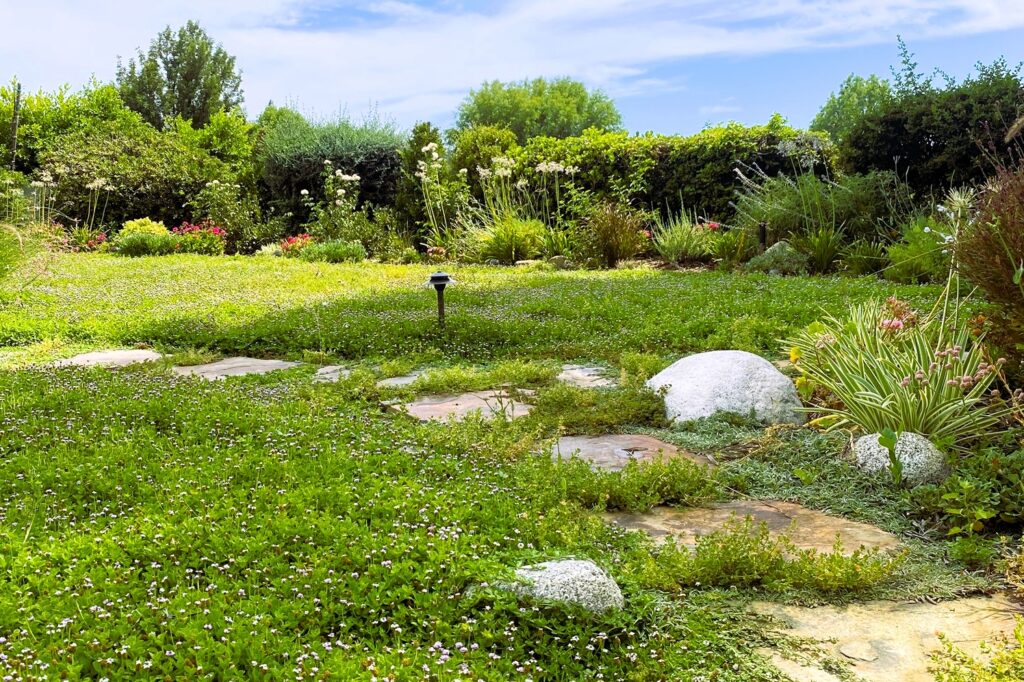
Can Kurapia Be Planted Over an Existing Lawn or Weedy Yard?
This is one of the most common questions we get. Some customers hope that Kurapia plugs can simply be planted into an existing lawn or a weed-choked yard. The hope is that the Kurapia will naturally “take over” and smother everything else. While this may sound appealing, that kind of growth is actually what defines an invasive plant (think of kudzu), which can be destructive to landscapes and ecosystems. Kurapia is not invasive, and it will not overwhelm established weeds or grasses in that way.
Instead, Kurapia’s strength lies in its deep root system and its ability to thrive with minimal water once established. To get the best results, the key is to start with a clean, weed-free soil surface before planting.
Steps for Preparing the Planting Area for Kurapia Installation
1. Remove Existing Weeds and Grass
Clear out old vegetation either mechanically (digging, mowing, or tilling) or chemically (herbicides). If you rototill, remember that tilling brings buried weed seeds to the surface, so you’ll need to address those as well.
2. Water the Bare Soil
Water the area for 2–3 weeks before planting, as if the plugs were already installed. This encourages hidden weed seeds near the surface to germinate, so you can remove them before planting. Pay special attention to aggressive weeds like oxalis, Bermuda grass, or nutsedge.
3. Plant and Establish Kurapia Plugs
Once the weeds are under control, install your plugs. For the first week or so, water lightly and frequently to help plugs take root. After that, gradually shift to deeper, less frequent watering to encourage long root growth. This is also how Kurapia outcompetes weeds: it thrives under deep, infrequent watering while shallow-rooted weeds struggle.
4. Mulch and Weed Prevention
Apply a seed-starting mulch to help Kurapia spread evenly and to block new weed seeds from germinating. If you live next to open fields or neighbors with heavy weed pressure, consider using a pre-emergent herbicide such as Barricade (choose a fertilizer-free formula to avoid unnecessary growth issues).
5. Ongoing Maintenance
Once established, Kurapia forms a dense groundcover that makes it very hard for weeds to invade. For persistent weeds like Bermuda grass or nutsedge, spot-treat with selective herbicides that target only grasses or sedges.
Key Takeaways
Kurapia will not “swallow up” existing weeds or lawns. Instead, the best practice is to start with a clean slate: clear the soil, manage weeds early, water strategically, and let Kurapia’s deep roots and dense coverage do the long-term work of keeping your landscape low-maintenance and weed-resistant.
Kurapia delivers where it matters: low water, low maintenance, high durability, and big curb appeal. Whether you’re looking to save on utilities, mow much less (or not at all), or meet local sustainability goals, Kurapia is the ultimate drought tolerant groundcover and lawn alternative.
Thank you visiting Kurapia.com, the ultimate drought tolerant groundcover. We are the inventor and sole grower of Kurapia. Click to order Kurapia New White or Kurapia Pink.