

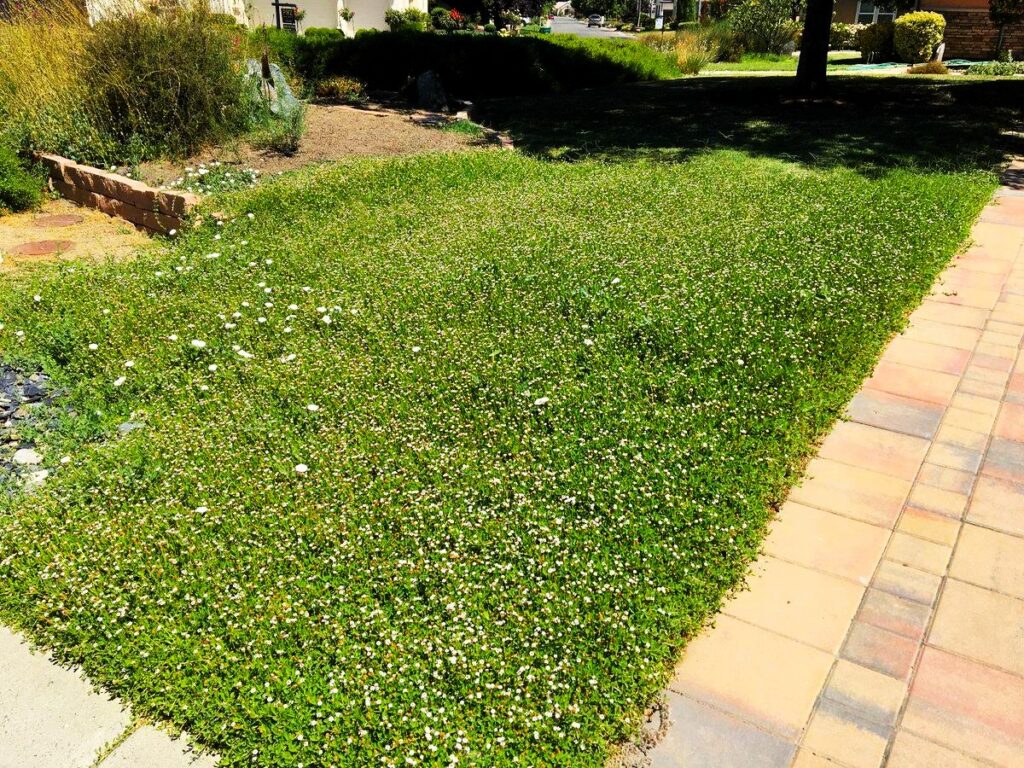
Our Neighborhood Walk Found Nine Lawn Alternatives to Kurapia
On the afternoon of March 17, 2023, we walked the streets and parkways of a Los Angeles neighborhood with a phone camera, all within about ten miles. The comparison photos were taken that afternoon, between 1:12 and 2:34 pm, so each planting faced the same weather and the same end of a wet winter. The one exception is artificial turf, photographed a month earlier in nearby Glendale.
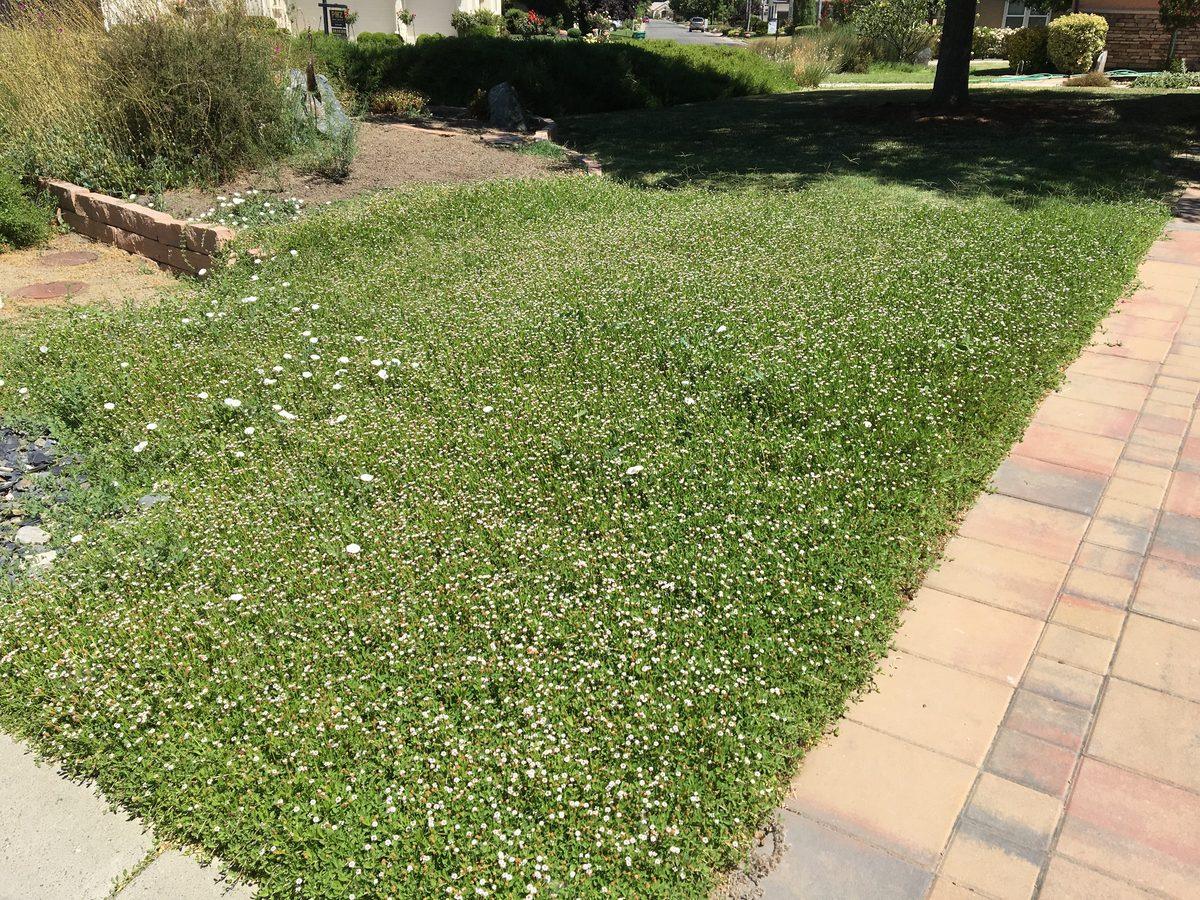
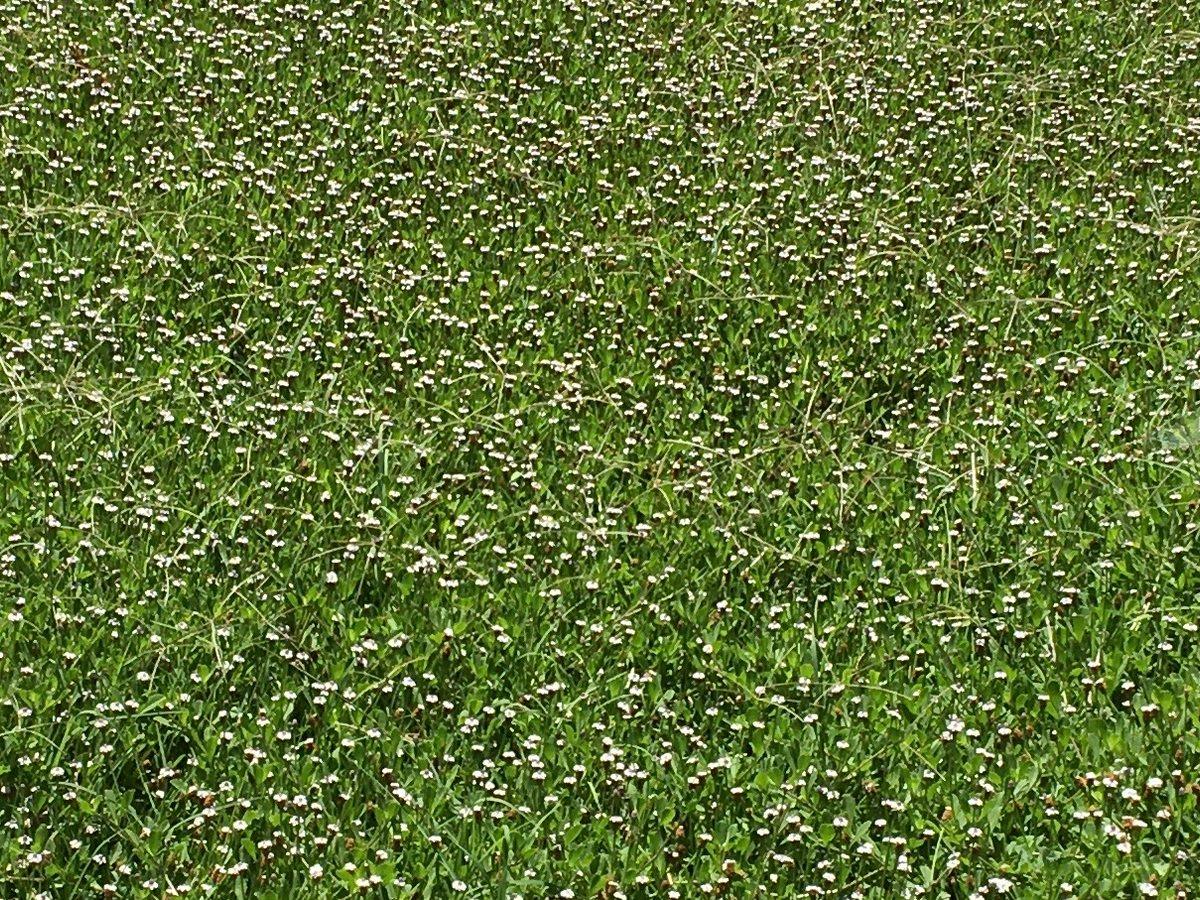
Next to each one is an established Kurapia lawn, photographed the following August in peak summer heat. Each section shows what the photos reveal, the main drawbacks of that groundcover, and how Kurapia compares.
One note before we start: Kurapia does need irrigation where there is little rain, but once established it typically uses far less water than turfgrass.
The Kurapia lawn


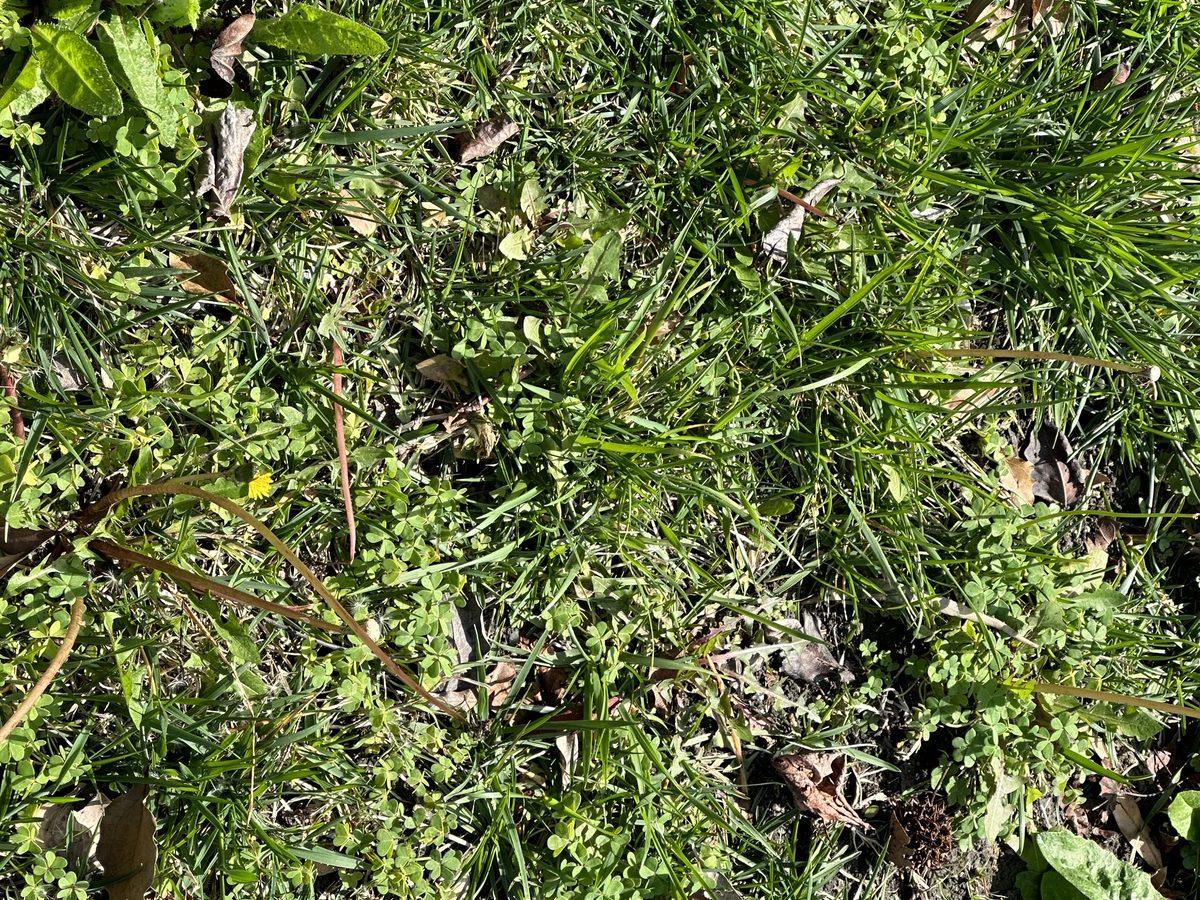
Tall fescue
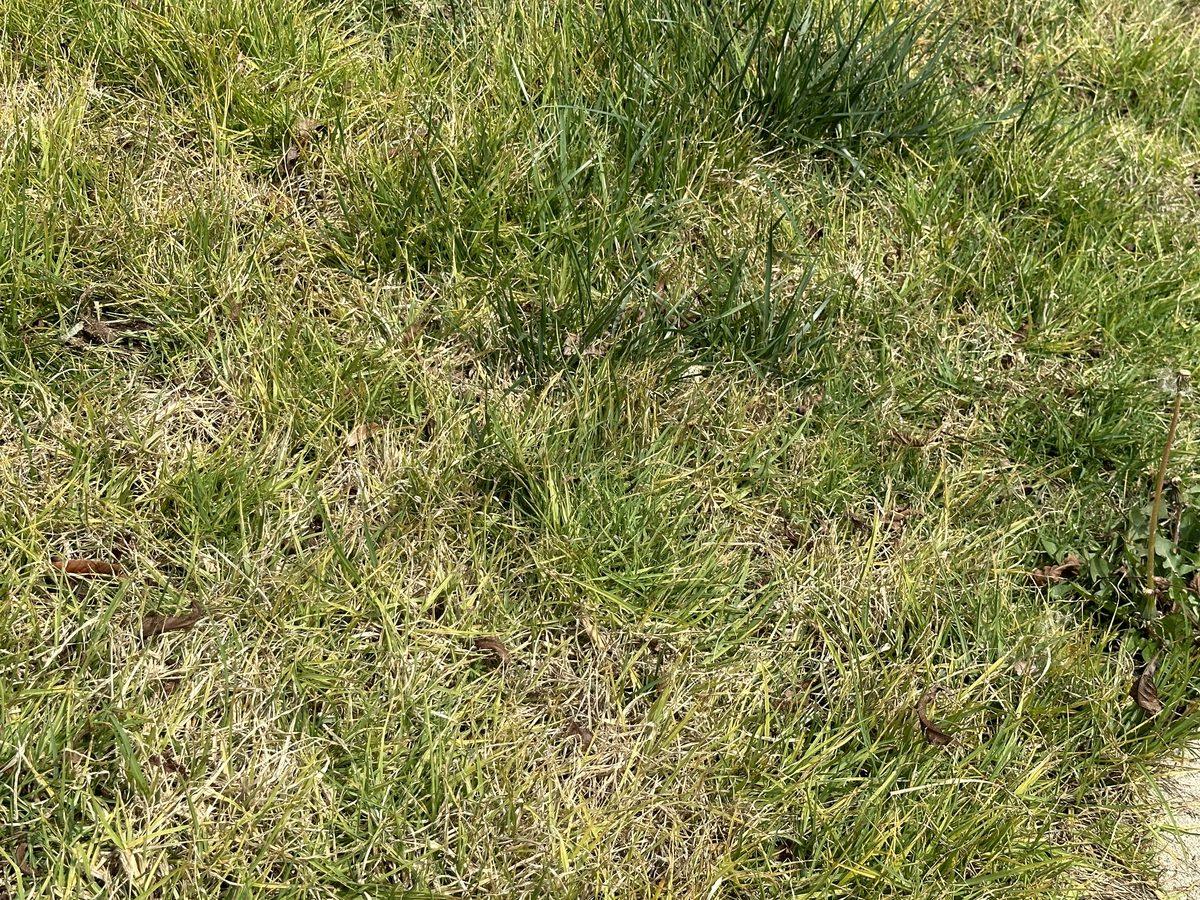

Drawbacks
- High water use, plus regular fertilizing to stay green
- Weekly mowing in season, and overseeding to fill thin spots
- Thins out in heat and compacted soil, which opens the door to weeds
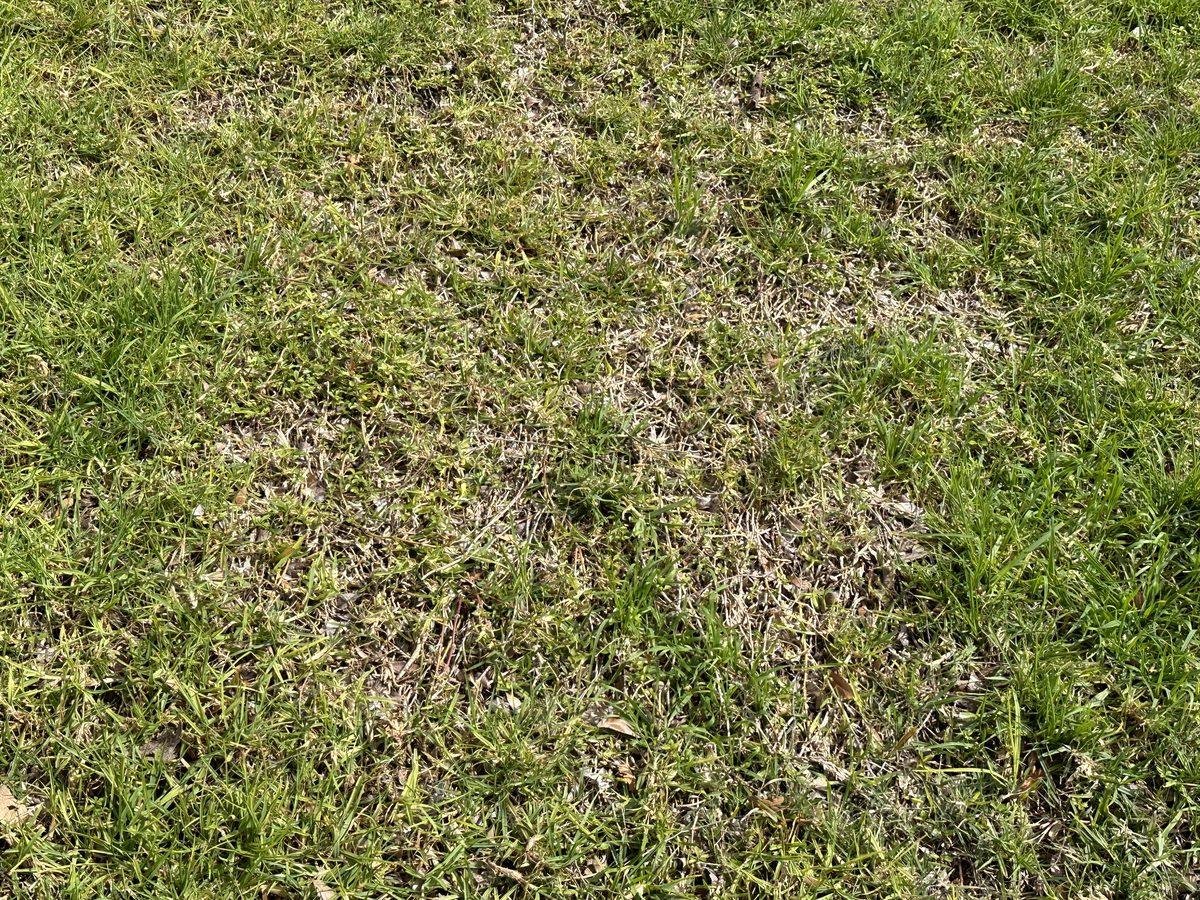
Bermuda grass

Drawbacks
- Spreads by runners into beds, cracks and hardscape joints, and is hard to remove
- Turns brown in winter unless overseeded
- Mowing every week or so in season, with moderate to high water use
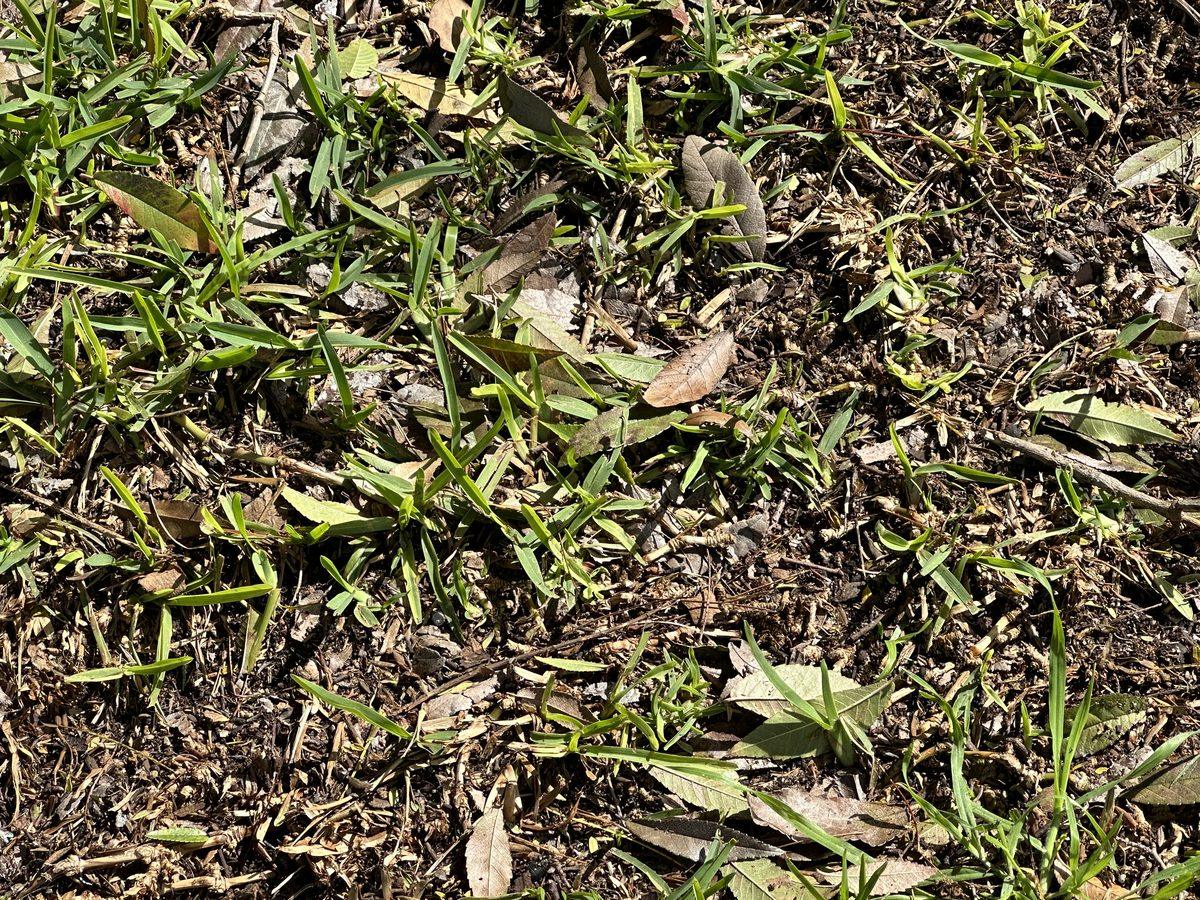
St. Augustine grass

Drawbacks
- Slow to recover once it thins out
- Goes brown in cool weather
- Needs regular water and mowing to stay full
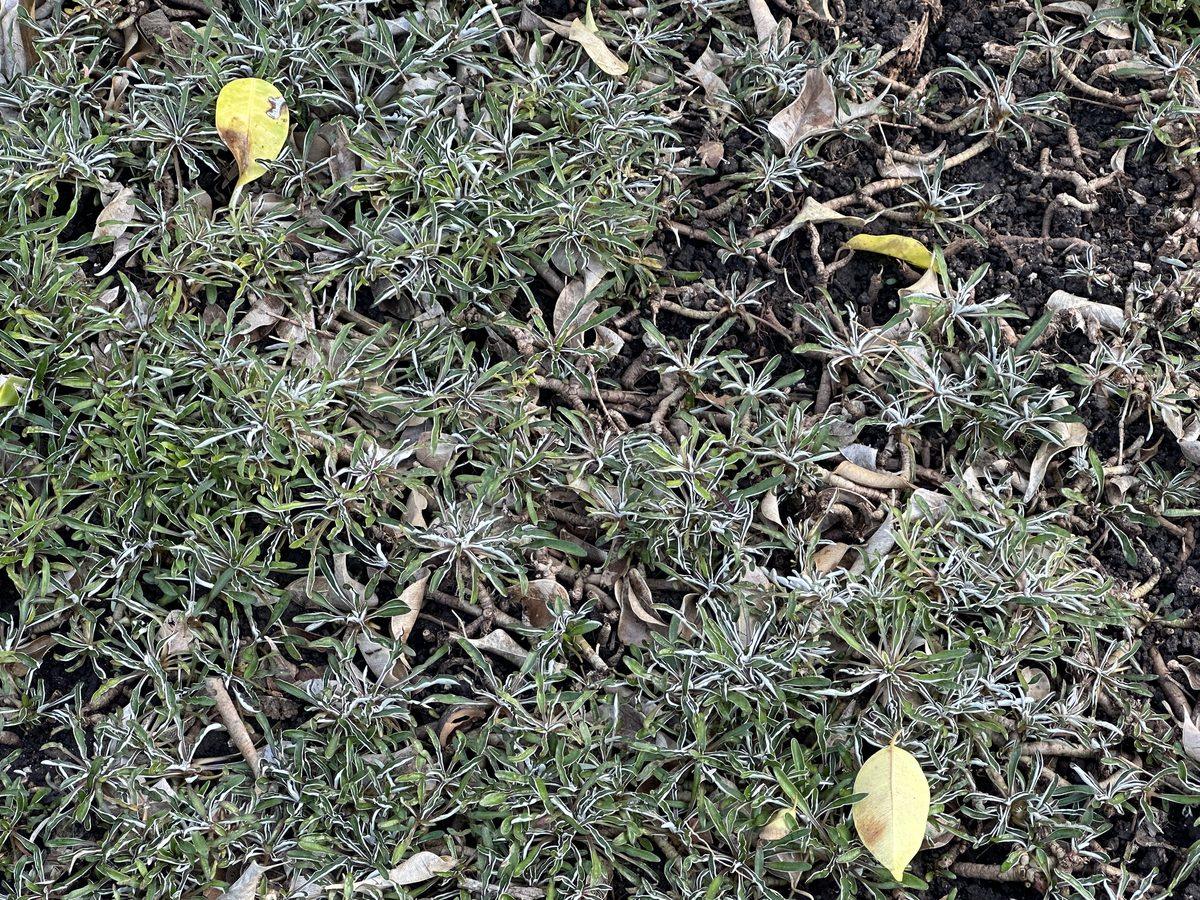
Dymondia (Dymondia margaretae)

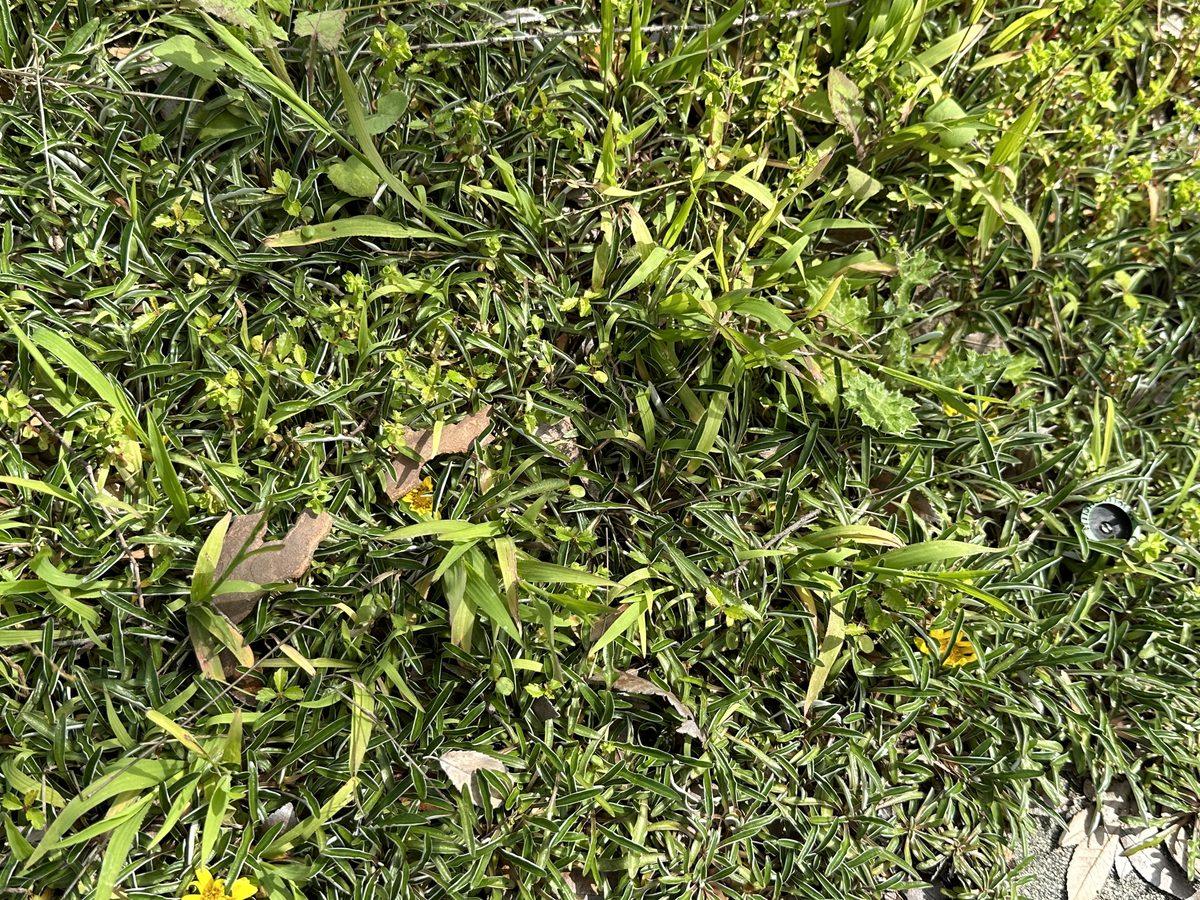

Drawbacks
- Very slow to fill in, so weeds take the gaps and need hand-weeding for a long time
- Struggles in inland heat and in heavy or poorly drained soil
- Thins out over time and often needs replanting
Ivy (Hedera)


Drawbacks
- Aggressive: climbs trees, fences and walls and smothers nearby plants
- Builds up woody stems underneath that harbor pests and debris
- Needs constant trimming to keep it in bounds
Aptenia (Aptenia cordifolia)

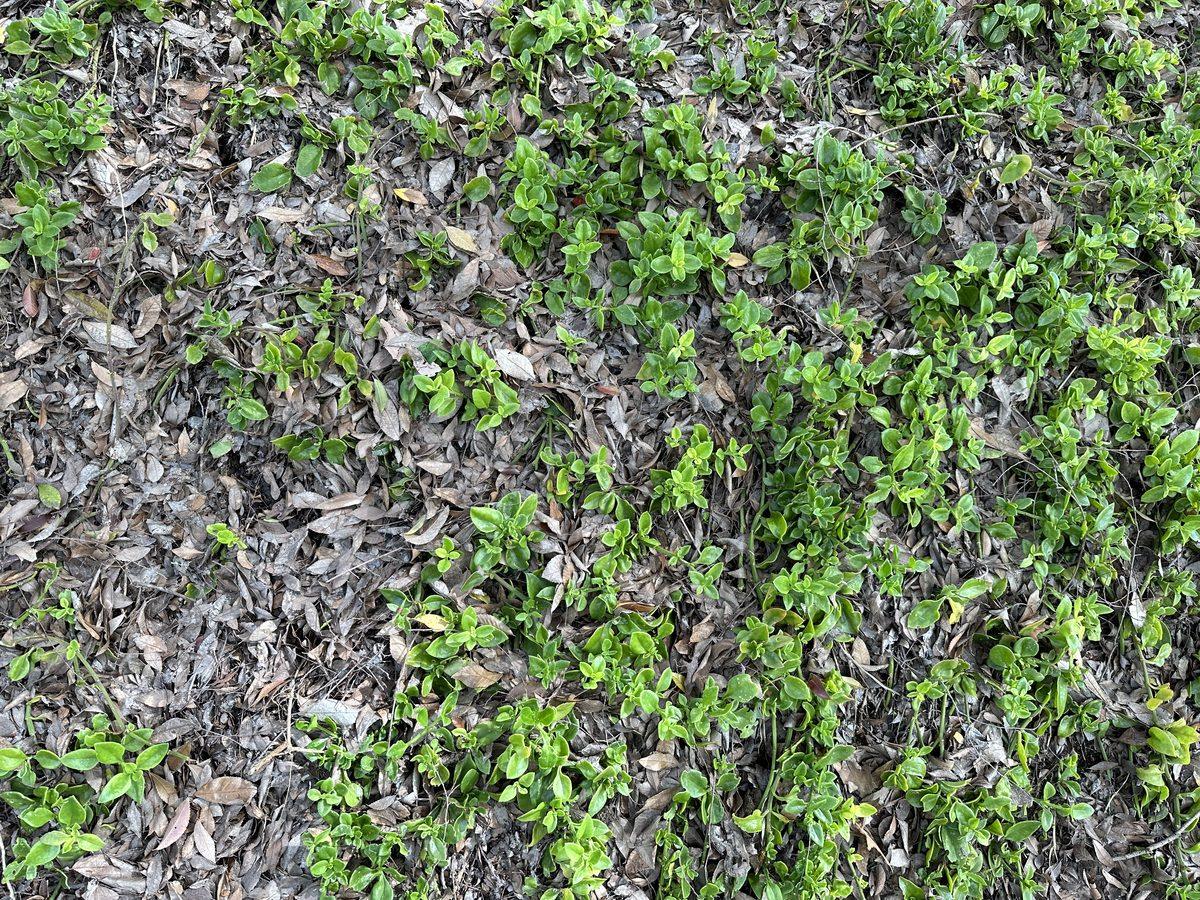
Drawbacks
- Sensitive to frost and cold, with dieback common
- Gets leggy and woody, and often needs replanting
- Shallow roots do little to hold soil on a slope
Iceplant (Delosperma, Carpobrotus)

Drawbacks
- Becomes woody and bare with age
- Rots in poorly drained or overwatered soil
- Some species are invasive along the coast
Trailing lantana (white and purple)
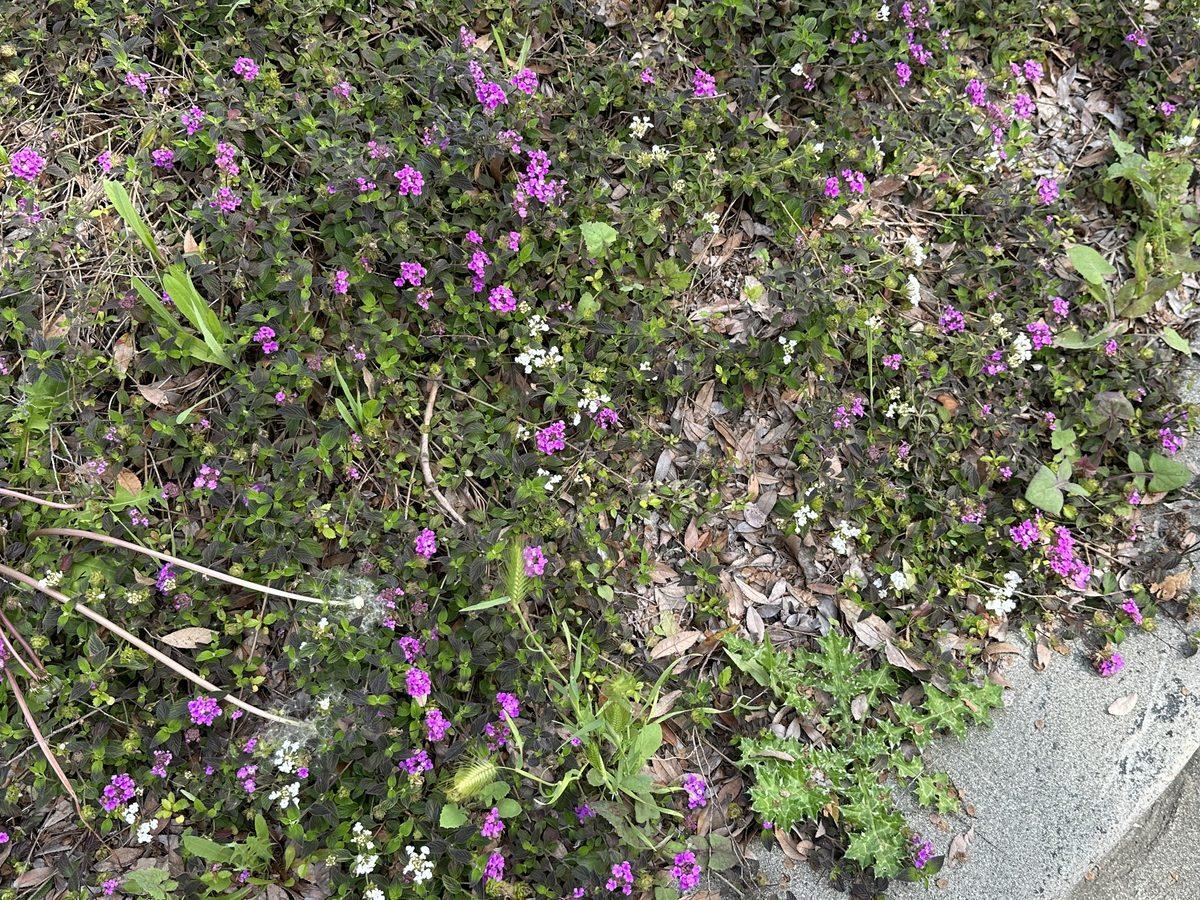

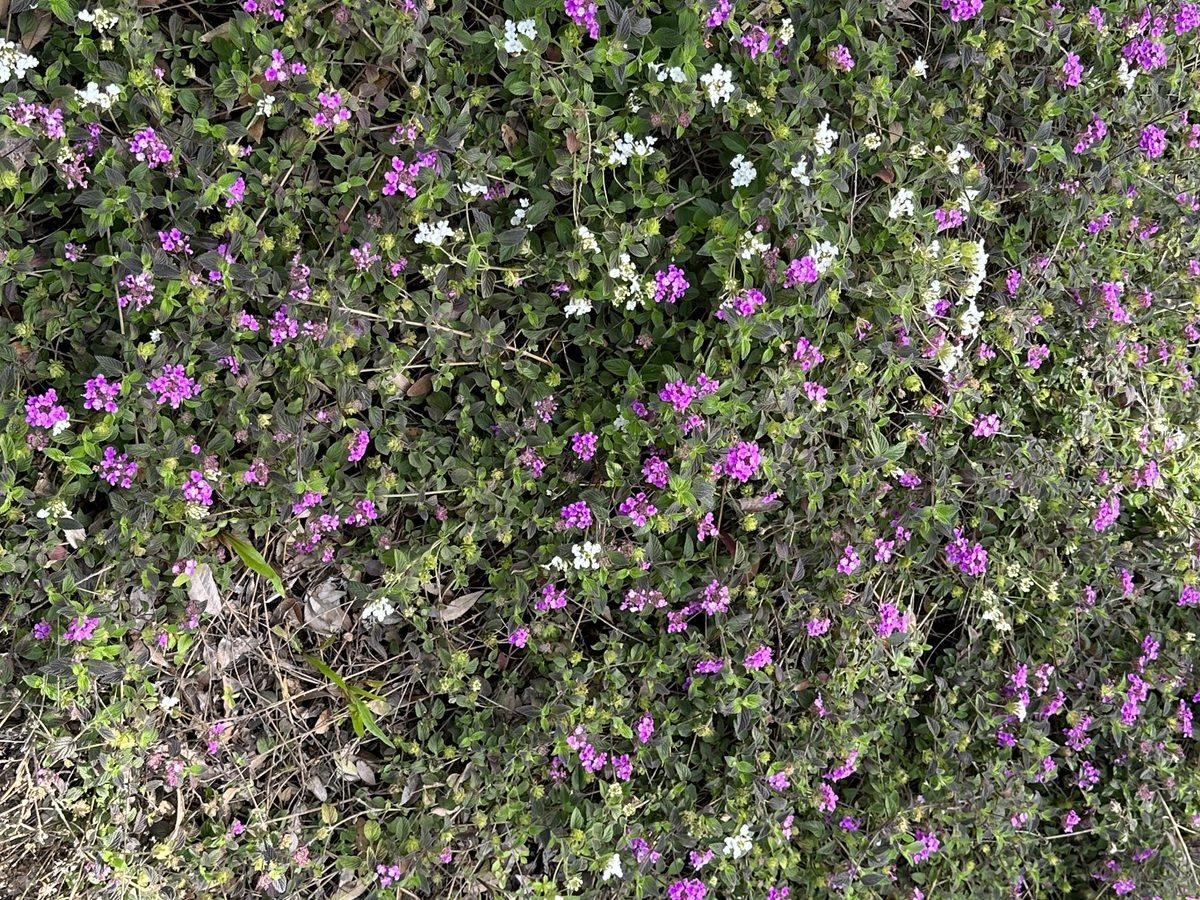
Drawbacks
- Open, woody habit lets weeds grow through
- Needs seasonal pruning to control size and woodiness
- Frost dieback can mean hard cutbacks or replanting
Artificial turf
Artificial turf is more common a few miles north in Glendale, so these photos come from parkway installations there, taken February 9, 2023.

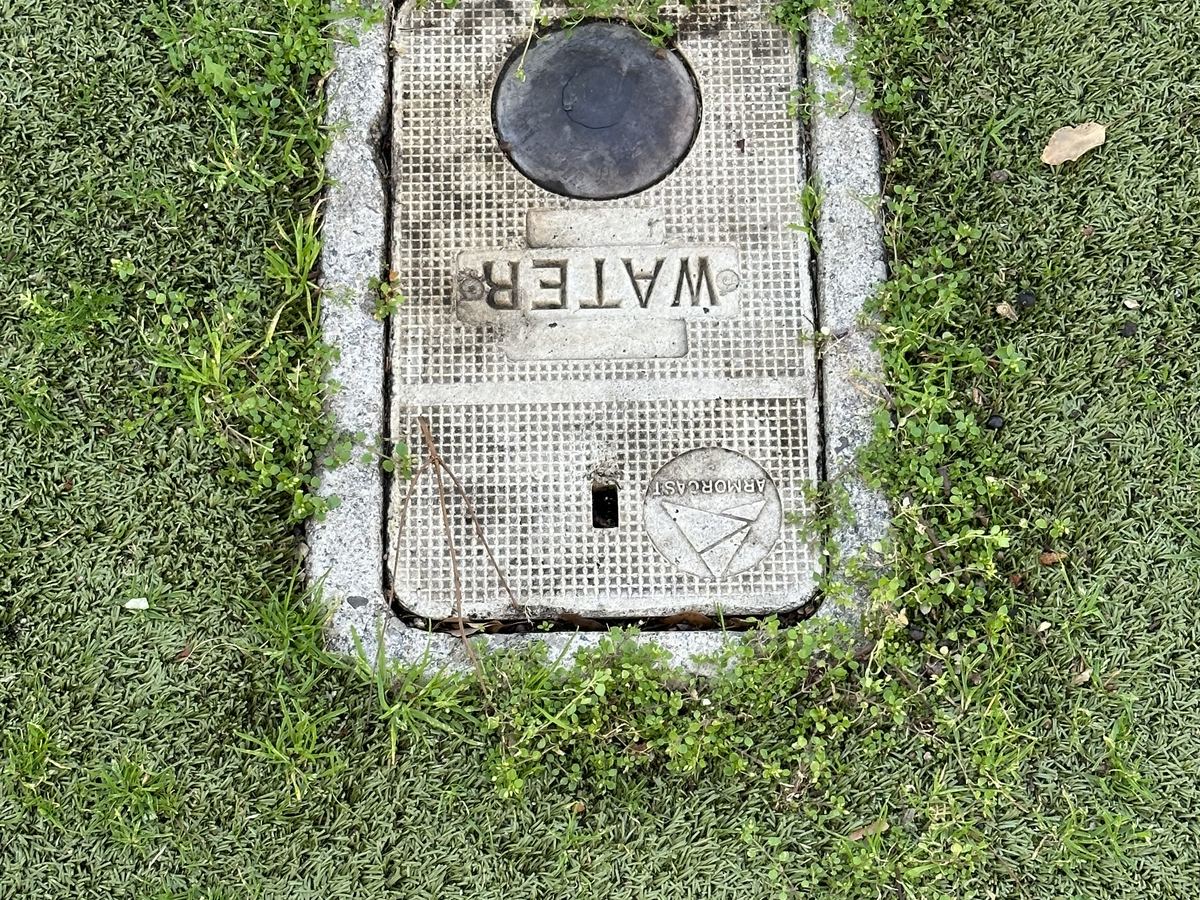


Drawbacks
- Weeds root in the dust and debris that collect in the fibers, and at seams and cutouts
- Gets very hot in direct sun
- Wears out and has to be replaced, with no cooling, habitat or soil benefit
Why Kurapia holds up
- Water: needs irrigation in dry regions, but typically far less than turfgrass once established
- Cover: fills in quickly in warm weather and closes the gaps where weeds start
- Heat: handles hot inland summers and reflective hardscape
- Maintenance: a monthly mow keeps it low, with no overseeding
- Soil: adapts to sandy, loam and clay soils
- Slopes: a dense root system helps hold soil in place
At a glance
| Groundcover | Water use | Upkeep | Heat / cold | What we saw |
|---|---|---|---|---|
| Kurapia | Low once established | Monthly mow | Strong heat; good cold | Dense, even cover |
| Tall fescue | High | Weekly mowing, overseeding | Weak in heat | Thinning, weeds moving in |
| Bermuda | Moderate to high | Weekly mowing | Good heat; brown in winter | Dormant, nutgrass |
| St. Augustine | Moderate to high | Regular mowing | Brown in cool weather | Not recovering in spring |
| Dymondia | Moderate | Hand-weeding, replanting | Weak in inland heat | Leaf loss, weeds taking over |
| Ivy | Moderate | Constant trimming | Moderate | Woody, invading other plants |
| Aptenia | Moderate | Trimming, replanting | Frost tender | Patchy, slope eroding |
| Iceplant | Low to moderate | Replanting woody areas | Frost tender | Woody, not resprouting |
| Trailing lantana | Moderate | Seasonal pruning | Frost dieback | Weeds growing through |
| Artificial turf | None (but hot) | Weeding, cleaning, replacement | Very hot surface | Weeds rooting in the fibers |
Thinking about replacing a lawn? Our planting calculator tells you how many flats you need for your yard. Planning 30 flats or more? Get a full estimate with freight from the Project Estimator. Landscape professionals can use the Professional Bid Estimator.
More comparisons and care guides are on the Kurapia blog.
Comparison photos taken March 17, 2023, in Los Angeles, CA. Artificial turf photos taken February 9, 2023, in Glendale, CA. Kurapia photos taken August 2023.